


Last Updated: October 23, 2026
Quick Summary
Letter recognition worksheets are printable learning tools that combine visual clarity, age-appropriate design, and structured progression to help preschoolers move from simple letter identification through confident letter writing. Effective worksheets balance challenge with encouragement, using clear letter forms, adequate spacing, and activities that build from observation to active engagement without overwhelming young learners.
- Effective letter recognition worksheets progress logically from recognition before writing, uppercase before mixed case, and single letters before full sequences.
- For preschoolers ages 3-5, letters should be at least 1-2 inches tall with clear spacing between them to reduce frustration and improve focus.
- Uppercase and lowercase letter matching worksheets should introduce 4-6 letter pairs at a time rather than all 26 letters on one page.
- Tracing worksheets work best when paired with multi-sensory engagement like saying letter sounds or connecting letters to simple illustrations.
- Worksheets are most effective when balanced with play-based learning like alphabet blocks, magnetic letters, and letter games.
Table of Contents
- What Makes Effective Printable Letter Recognition Worksheets
- Free Printable Preschool Alphabet Worksheets: What to Look For
- Uppercase and Lowercase Letter Matching Worksheets
- Alphabet Tracing Worksheets for Preschool: Building Fine Motor Skills
- Printable Letter Sound Worksheets for Preschool
- Choosing the Right Worksheets for Your Child's Skill Level
- Balancing Worksheet Practice With Play-Based Learning
- Frequently Asked Questions
What Makes Effective Printable Letter Recognition Worksheets
When parents and educators search for printable letter recognition worksheets, they're looking for more than just pages to print. Effective letter recognition worksheets combine visual clarity, age-appropriate design, and structured progression that moves children from simple letter identification through confident letter writing. The best worksheets balance challenge with encouragement, helping preschoolers build foundational literacy skills without overwhelming them.

At The Happy Crab Play House, we understand what makes these materials work in real classrooms and home learning environments. A strong letter recognition worksheet includes clear letter forms, adequate spacing for young hands, and activities that build from observation to active engagement. The design matters as much as the content, fonts should be simple and legible, colors should support focus rather than distract, and instructions should be visual enough that children can follow them independently.
What separates mediocre worksheets from truly effective ones comes down to intentional design. Letters need consistent sizing and spacing. Activities should progress logically, recognition before writing, uppercase before mixed case, single letters before full sequences. Most importantly, effective worksheets respect the child's developmental stage, offering just enough challenge to build skills without frustration.
Free Printable Preschool Alphabet Worksheets: What to Look For
Finding free printable preschool alphabet worksheets means knowing what criteria actually matter. Start by checking whether the worksheet targets a specific skill, letter identification, tracing, matching, or writing, rather than trying to do everything on one page. A worksheet that focuses on one clear objective works better than a cluttered page with mixed activities.
Look for age-appropriate letter sizing. For children ages 3-5, letters should be large enough to trace comfortably with a pencil or crayon. The spacing between letters matters too, crowded worksheets frustrate young learners, while well-spaced designs encourage focus and accuracy.
Consider the visual design. Minimal distractions help preschoolers focus on the letter itself. Worksheets with too many colors, illustrations, or competing elements pull attention away from the learning target. That said, a single relevant illustration or simple border can make a worksheet feel less clinical and more inviting for young learners.
Check whether instructions are visual and intuitive. Preschoolers can't read complex directions, so well-designed worksheets use simple icons, arrows, or examples to show what to do. This independence reduces your need to explain every step and builds confidence in children who are just beginning to follow visual cues.
| Worksheet Feature | Why It Matters | What to Look For |
|---|---|---|
| Letter size | Comfortable for small hands to trace | 1-2 inches tall minimum |
| Spacing | Reduces frustration and improves focus | Clear gaps between letters |
| Font style | Matches early reader materials | Simple, clean sans-serif fonts |
| Visual clutter | Supports concentration | Minimal colors and illustrations |
| Instructions | Children can understand independently | Icons, arrows, or visual examples |
Uppercase and Lowercase Letter Matching Worksheets
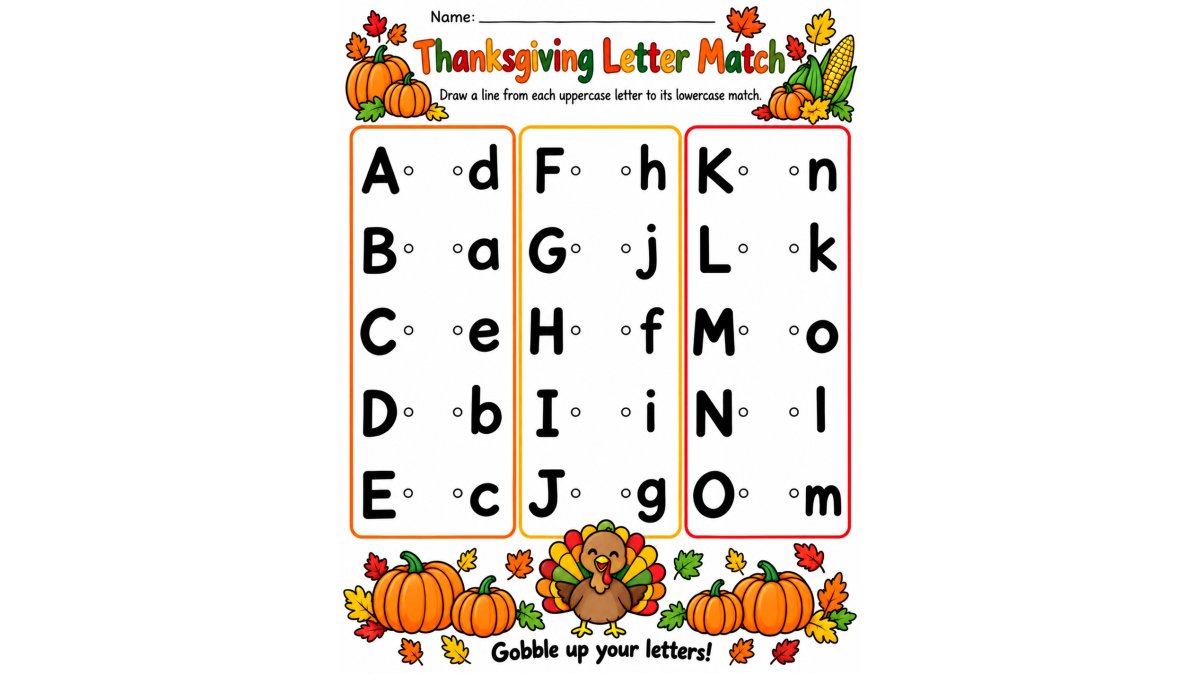
Uppercase and lowercase letter matching worksheets bridge an important gap in early literacy. Many preschoolers recognize uppercase letters first because they see them in signs, logos, and book titles. Matching worksheets help them understand that the same letter exists in two forms and that both represent the same sound and concept.

Effective uppercase and lowercase letter matching worksheets start with simple visual pairing, one uppercase letter matched to one lowercase letter on the same page. As children gain confidence, worksheets can introduce multiple options, requiring children to identify the correct match from several choices.
The design of matching worksheets affects learning success. Lines or arrows connecting letters should be clear but not so prominent that they dominate the page.
One common mistake is introducing too many letter pairs at once. Worksheets that ask children to match all 26 letters on a single page overwhelm most preschoolers. Focused worksheets that work with 4-6 letter pairs at a time build confidence and mastery before moving to the next set.
Alphabet Tracing Worksheets for Preschool: Building Fine Motor Skills
Alphabet tracing worksheets for preschool serve a dual purpose: they develop the fine motor skills children need for writing while reinforcing letter recognition and shape awareness. Tracing activities engage the hand muscles, finger coordination, and hand-eye connection that prepare children for independent writing.

Effective tracing worksheets use dotted or dashed letter outlines that children follow with pencil, crayon, or marker. The weight and style of the tracing line matters, lines should be visible enough to follow clearly but not so thick that they constrain the child's hand movement.
The progression in tracing worksheets should move from thick, widely-spaced letters to thinner lines as children gain control. Early worksheets might include guide dots at letter starting points to show children where to begin. More advanced worksheets remove these supports, expecting children to find starting points independently. This gradual release of support builds independence while maintaining success.
Tracing activities work best when paired with multi-sensory engagement. Some children benefit from tracing with their finger before using a pencil. Others do better when they can say the letter name or sound as they trace. Adding a simple illustration that starts with the letter sound (A for apple, B for ball) connects letter shapes to meaning and language.
Printable Letter Sound Worksheets for Preschool
Printable letter sound worksheets connect letter recognition to phonemic awareness by pairing letters with their corresponding sounds and simple illustrations. These worksheets help children understand that letters are not just visual shapes, they represent sounds that build words and meaning.
Thanksgiving Letter Practice →
Effective letter sound worksheets pair each letter with a single, clear illustration of a word that starts with that sound. The illustration should be simple and recognizable, an apple for A, a ball for B. Labeling the illustration with the word reinforces the connection between the letter, its sound, and a concrete example.
The best letter sound worksheets include activities that reinforce the letter-sound connection. Children might circle objects that start with the featured letter, match the letter to pictures, or trace the letter while saying its sound. These multi-modal activities engage different learning pathways and help the connection stick.
Letter sound worksheets work best when introduced after children have some letter recognition foundation. Trying to teach letter sounds before children recognize letters is overwhelming. A logical sequence introduces uppercase letter recognition first, then lowercase letters, then letter sounds, then blending sounds into simple words. Worksheets designed with this progression in mind support children's natural learning trajectory.
Choosing the Right Worksheets for Your Child's Skill Level
Not all letter recognition worksheets work for every child at every stage. Choosing the right worksheets for your child's current skill level makes the difference between engagement and frustration. Start by observing what your child can already do. Can they identify letters? Recognize both uppercase and lowercase? Trace letters with some control?
Children who are just beginning letter recognition need simple identification worksheets, pointing to or circling specific letters among several options. These build confidence and foundational recognition without requiring fine motor control. Worksheets at this stage should focus on a small set of letters, maybe 4-6, rather than the full alphabet.
Once children can identify letters with some consistency, tracing worksheets become appropriate. At this stage, look for worksheets with clear, well-spaced letters and guide dots or starting points. Children who can trace letters with reasonable control are ready for matching uppercase and lowercase letters and beginning simple letter writing activities.
The final progression moves toward independent letter writing, where children write letters with minimal guidance. Worksheets at this stage might show a letter at the top of the page with blank lines below for practice. Some include a dotted outline of one letter as a model, while others remove that support entirely.
Balancing Worksheet Practice With Play-Based Learning
Worksheets are one tool in a comprehensive early literacy approach, but they shouldn't be the only tool. The most effective preschool learning combines structured practice with play-based activities that build the same skills in more natural, joyful contexts.
Letter recognition happens naturally when children play with alphabet blocks, magnetic letters, or letter-shaped toys. Letter sounds emerge when you sing alphabet songs, read books with rhyming text, or play rhyming games.
The research on early learning consistently shows that play-based approaches and structured practice both have value. The key is balance.
Think of worksheets as one component of a balanced literacy diet. They work best when paired with read-aloud time, alphabet games, letter songs, and hands-on letter play.
The Happy Crab Play House resources are designed with this balance in mind. Our printable worksheets target specific skills, letter tracing, letter matching, letter sounds, but they're meant to complement, not replace, playful letter exploration.
Choosing the right letter recognition worksheets makes a real difference in how children experience early literacy learning. The most effective worksheets combine clear design, age-appropriate skill progression, and activities that build confidence alongside competence.
The Happy Crab Play House offers a carefully selected collection of printable letter recognition worksheets designed by an experienced early childhood educator. Our letter matching and alphabet tracing worksheets progress logically through the skills preschoolers need to build confident early literacy. Explore our collection and discover how thoughtfully designed worksheets can support your child's journey toward reading and writing success. Shop Now
Frequently Asked Questions
What are the best printable letter recognition worksheets for preschoolers?
The best worksheets combine letter identification, tracing, and matching activities in single-page formats that don't overwhelm young learners. Look for worksheets featuring uppercase letters first, then introduce lowercase and matching tasks once children recognize the basic alphabet. Themed worksheets (like seasonal activities) keep practice engaging. The Happy Crab Play House offers focused options like letter matching and A-Z tracing worksheets designed for ages 3-5, each priced at $1.00 and printable for repeated use.
How often should preschoolers practice letter recognition?
Short, consistent practice works better than long sessions. Aim for 5-10 minutes daily using printable letter recognition worksheets, rather than 30 minutes once a week. Young learners retain letters through repeated exposure across multiple days. Combine worksheet practice with letter games, alphabet songs, and everyday spotting (pointing out letters on signs) to reinforce learning without making it feel like a chore.
Should preschoolers learn uppercase or lowercase letters first?
Start with uppercase letters. They are larger, simpler to recognize, and appear prominently in children's books and environmental print. Most children naturally encounter capital letters first on signs and packaging. Once children identify uppercase letters confidently, introduce lowercase letters and letter matching worksheets. This progression builds confidence and prevents confusion between letter forms.
Are printable letter recognition worksheets effective for preschool learning?
Worksheets are one effective tool among many. They work best when combined with play-based activities, read-alouds, and hands-on exploration. Worksheets build fine motor skills through tracing, reinforce letter identification through repeated exposure, and provide structure for focused practice. However, worksheets alone don't create literacy. Balance them with games, storytelling, and natural alphabet discovery to foster genuine interest in reading and learning.


