


Table of Contents
- Understanding Bedtime Anxiety in Preschoolers
- Building a Preschool Bedtime Routine That Works
- Calming Activities for Preschoolers at Bedtime
- Bedtime Stories That Address Fears and Worries
- Preschool Feelings Activities for Emotional Regulation
- Scripts for Common Bedtime Worries
- Adapting Activities for Your Child's Temperament
- Recognizing When Professional Support Is Needed
- Frequently Asked Questions
Last Updated: October 21, 2026
Understanding Bedtime Anxiety in Preschoolers
Bedtime anxiety preschoolers experience is real, and it affects far more families than you might think. When your child resists sleep, calls out repeatedly, or expresses fear about the dark, that anxiety is genuine.
Your preschooler's brain is rapidly developing. They're becoming more aware of their surroundings, more imaginative, and more prone to worry. Bedtime anxiety in preschoolers can show up as resistance to going to bed, nighttime fears, difficulty settling down, or frequent wake-ups.
The key is consistency, calm presence, and activities designed to soothe both body and mind. This guide covers the specific activities, scripts, and routines that work for anxious preschoolers.
Building a Preschool Bedtime Routine That Works
A preschool bedtime routine isn't just about getting your child to sleep. It's a predictable sequence that signals to their brain and body that rest is coming. Children thrive on predictability.
Your routine should begin 30-45 minutes before your target sleep time. This gives enough time for your child to wind down without rushing. The routine should include 4-5 key activities in the same order each night.
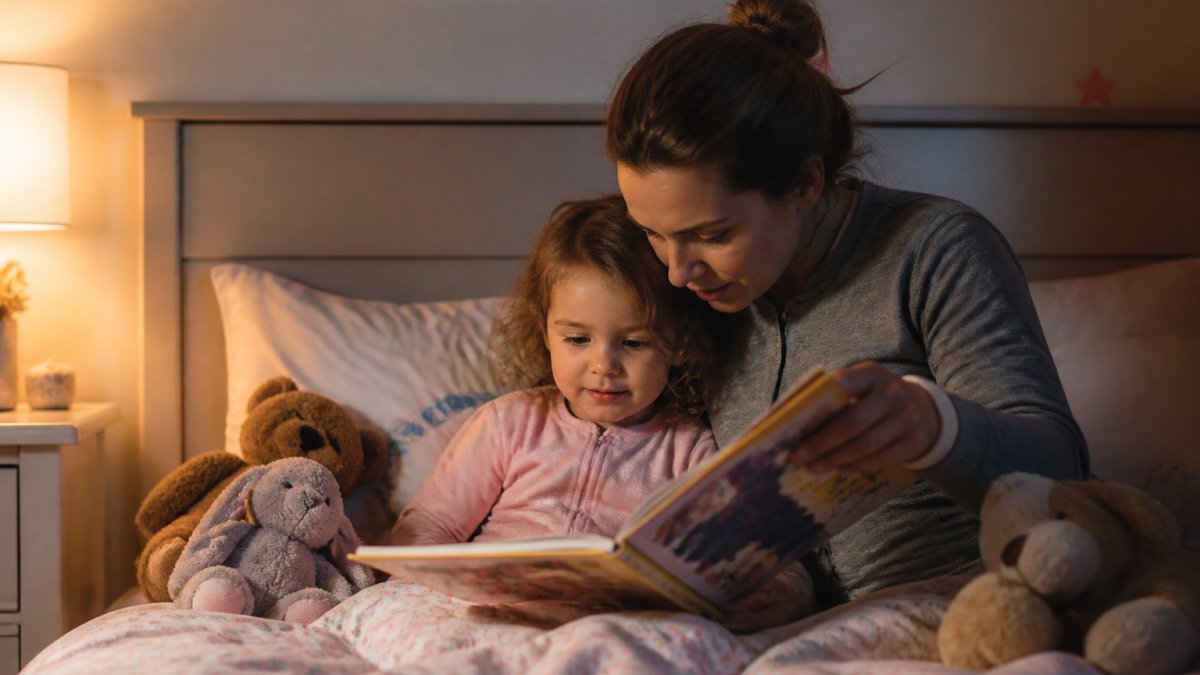
Timing and Transitions
Timing matters more than most parents realize. Preschoolers need clear transitions between activities. Start your bedtime routine at the same time each night, even on weekends.
Here's a sample timeline:
| Time | Activity | Duration |
|---|---|---|
| 7:00 PM | Dinner ends, play winds down | 15 min |
| 7:15 PM | Bath or sensory activity | 15-20 min |
| 7:35 PM | Pajamas and calming activity | 10 min |
| 7:45 PM | Bedtime story | 10-15 min |
| 8:00 PM | Lights out, sleep begins | , |
Use verbal cues to signal transitions. Say things like: "In 5 minutes, it will be bath time" and "After your story, it's time to sleep." This prepares your child's mind for what comes next.
Avoid sudden switches. Don't jump from active play directly to bed. That jarring transition triggers anxiety. Instead, gradually lower stimulation as bedtime approaches.
Creating a Sleep-Friendly Environment
Your child's bedroom should feel safe and calm. Dim the lights 30 minutes before bedtime. Bright light signals wakefulness to your child's brain.
Keep the bedroom cool, quiet, and free of screens. The blue light from tablets and phones interferes with sleep hormones (The influence of blue light on sleep, performance and wellbeing in young adults).
Use soft textures: a favorite blanket, a stuffed animal, or a soft pillow. These provide comfort and security. Some children benefit from a nightlight that casts a soft glow, making the dark feel less scary.
Temperature matters too. A slightly cool room (around 68-70°F) promotes better sleep than a warm one.
Calming Activities for Preschoolers at Bedtime
Calming activities for bedtime anxiety preschoolers serve a specific purpose: they shift your child from an alert state to a relaxed one. These activities engage their mind in a gentle way, preventing racing thoughts while preparing the body for sleep.
Breathing Exercises and Relaxation Techniques
Deep breathing is one of the most powerful tools for calming an anxious nervous system. Even young preschoolers can learn simple breathing exercises.
Try the "Bubble Breath" technique:
- Have your child pretend to blow bubbles slowly
- Inhale through the nose for a count of 3
- Exhale through the mouth for a count of 4 (longer exhale)
- Repeat 5-10 times
Another simple option is "Smell the Flower, Blow the Candle":
- Inhale slowly through the nose (smelling an imaginary flower)
- Exhale slowly through the mouth (blowing out an imaginary candle)
- Repeat 5 times
These exercises activate your child's parasympathetic nervous system, the "rest and digest" mode. Practice these during calm times first, so your child knows them well before bedtime.
Guided Imagery and Mindfulness Games
Guided imagery uses imagination to create a sense of safety and calm. Your child's imagination is powerful, use it to their advantage.
Try this simple guided imagery script:
"Close your eyes. Imagine you're in a cozy place where you feel safe. Maybe it's a beach with warm sand, or a forest with soft trees. You feel warm and comfortable. Listen to the gentle sounds around you. Feel how safe you are. Your body is heavy and relaxed. You're ready to rest."
Keep it simple and age-appropriate. Use sensory details: what do they see, hear, feel?
Mindfulness games work too. Try "5-4-3-2-1":
- Name 5 things you can see
- Name 4 things you can touch
- Name 3 things you can hear
- Name 2 things you can smell
- Name 1 thing you can taste
This grounds your child in the present moment, quieting worry about what might happen.
Warm Baths and Sensory Soothing
A warm bath 30-45 minutes before bed helps regulate your child's body temperature. The warm water relaxes muscles and signals to the body that sleep is approaching.
Make bath time sensory-rich but calm:
- Add soft lighting (a waterproof bath light or candles outside the tub)
- Use unscented or gently scented bath water
- Include soft washcloths or bath toys that don't overstimulate
- Keep the water warm but not hot
After the bath, wrap your child in a soft towel. The transition from warm water to cool air and soft fabric is soothing.
Other sensory activities work too:
- A gentle hand or foot massage with unscented lotion
- Soft music playing quietly in the background
- Wrapping in a weighted blanket (if your child enjoys pressure)
Bedtime Stories That Address Fears and Worries
Stories are powerful tools for helping anxious children. When a story addresses your child's specific fears, it normalizes those feelings and shows a path through them.
Choose books that match your child's worries. If your child fears the dark or monsters, a story like Monster in My Room! directly addresses that fear.

If your child feels nervous about new situations or experiences, Little Duck Feels Nervous offers comfort.
Read the same stories repeatedly. Repetition builds familiarity and comfort. Your child knows how the story ends, which itself is calming.
Preschool Feelings Activities for Emotional Regulation
Emotional regulation is the ability to recognize and manage big feelings. Preschoolers are learning this skill, and bedtime is often when emotions peak.
Help your child name their feelings. Use simple words: "You feel worried," "You're feeling scared," "Your body feels jumpy." Naming emotions reduces their intensity.
Try a simple feelings check-in before bed:
- "What feeling are you having right now?"
- "Where do you feel it in your body?"
- "What could help you feel calmer?"
This teaches your child that feelings are temporary and manageable.
Use stories to explore emotions.
Create a "worry box" where your child can place written or drawn worries before bed. Tell them: "We're putting these worries in the box for tonight.
Scripts for Common Bedtime Worries
Real conversations with your anxious child matter. Here are scripts for common bedtime concerns:
"There's something in my room / I'm scared of the dark"
Your response: "I hear you. That feeling is real. Let's look together. See? That's the coat hanging on the hook.
"I can't sleep / My brain won't stop thinking"
Your response: "That's okay. Your brain is working hard. Let's help it rest. Try the bubble breath we practiced.
"I miss you / Don't leave me"
Your response: "I love you. I'm not far away. I'm right in the next room. You're safe. I'll check on you in a few minutes.
"What if something bad happens?"
Your response: "I understand you're worried. My job is to keep you safe. I do that all day and all night.
Use a calm, confident tone. Your child takes cues from you. If you seem anxious, they'll feel more anxious.
Adapting Activities for Your Child's Temperament
Not every activity works for every child. Some preschoolers respond to stories, others to breathing exercises, others to sensory activities. Your job is to notice what settles your child.
For the sensitive, easily overwhelmed child:
- Keep the routine very simple and consistent
- Minimize sensory input (soft lighting, quiet music, no bright colors)
- Offer choices within the routine: "Do you want the blue blanket or the green one?"
- Use gentle, quiet language
For the active, high-energy child:
- Include a physical wind-down activity: gentle stretching, a warm bath, or progressive muscle relaxation
- Keep routines shorter but very consistent
- Offer a "heavy work" activity: pushing against a wall, squeezing a pillow
- Use clear, direct language and consistent cues
For the anxious, worry-prone child:
- Include reassurance explicitly in your routine
- Use stories that normalize worry and show solutions
- Practice calming techniques during the day so they're familiar at bedtime
- Validate feelings before redirecting: "I see you're worried. That's okay. Let's breathe together."
For the imaginative, creative child:
- Use guided imagery and storytelling
- Let them create their own calming visualizations
- Allow them to bring a comfort object or create a "safe place" ritual
- Engage their imagination to help with worries
Track what works. Keep a simple log: "Story worked well," "Breathing exercise helped," "Bath calmed her down." After a week, patterns emerge.
Recognizing When Professional Support Is Needed
Most bedtime anxiety improves with consistent routines and calming activities. But sometimes, anxiety persists or worsens despite your efforts.
Consider seeking professional support if:
- Your child's anxiety is severe or interferes with daytime functioning
- Sleep deprivation is affecting your child's behavior, mood, or development
- Your child has nightmares or night terrors that don't improve after 2-3 weeks of new routines
- Your child expresses persistent, intense fears that seem beyond typical development
- Bedtime anxiety is accompanied by other anxiety symptoms (separation anxiety, social withdrawal)
- Your child has experienced trauma or a significant life change
A pediatrician, child psychologist, or sleep specialist can assess your child and recommend additional strategies or interventions. There's no shame in seeking help. Sometimes professional guidance accelerates progress.
Bedtime anxiety in preschoolers responds well to predictable routines, calming activities, and your consistent, calm presence. Start with one or two activities that feel right for your child's temperament. Build from there. Within a few weeks, most children settle into a calmer bedtime pattern.
The Happy Crab Play House creates books and activities designed specifically to support preschoolers through big feelings and bedtime worries. Stories like Monster in My Room! and Little Duck Feels Nervous directly address common childhood fears and help children understand that adults take their worries seriously.

Frequently Asked Questions
What calming activities work best for bedtime anxiety in preschoolers?
Calming activities for preschoolers include deep breathing exercises, guided imagery, warm baths, and gentle storytelling. Breathing exercises help settle a worried heart, try the 'bubble breath' where your child pretends to blow bubbles slowly. Guided imagery invites them to visualize a safe, peaceful place. Warm baths with dim lights signal the body it's time to unwind. Stories that address nighttime fears directly, like Monster in My Room!, help children feel reassured that grown-ups take their worries seriously.
How long should a preschool bedtime routine take?
A predictable preschool bedtime routine should last 20-30 minutes. This gives enough time for wind-down activities without stretching bedtime so long that your child becomes restless. Include a warm bath, calming sensory activities, and 10-15 minutes of story time. Consistency matters more than length, the same sequence every night helps your preschooler's nervous system recognize it's time to settle and prepare for sleep.
Can imaginative play help preschoolers manage bedtime anxiety?
Yes. Imaginative play gives preschoolers a safe way to process fears and practice self-regulation. Bedtime stories with brave characters, like The Brave Little Crab, show children that courage means acting even when you feel unsure. Play-based activities help them externalize worries, acting out a character facing a challenge, then overcoming it, builds emotional resilience. Preschoolers learn that they can face difficult feelings and come through them.
When should I seek professional support for my child's bedtime anxiety?
Consider professional support if your child's bedtime anxiety persists despite a consistent routine and calming activities, if it includes intense nightmares or night terrors that disrupt sleep repeatedly, or if anxiety is affecting daytime behavior or your family's wellbeing. A pediatrician or child psychologist can assess whether the anxiety reflects typical preschool development or requires additional intervention. Trust your instinct, you know your child best.


